

09 Sep Queer Art in Germany – Artists, Institutions and the Importance of Visibility
What makes art queer?
The most obvious answers often begin with what we can see: queer bodies, same-sex intimacy, sexuality, gender nonconformity or explicitly LGBTQ+ experiences. These images matter. For generations, experiences outside heteronormative ideas of love, desire and identity were excluded from museums, art history and public representation. Making them visible remains important.
But queer art can be more difficult to define than its subject matter suggests.
A painting does not necessarily have to depict two men kissing to speak about queer experience. It can be about longing. About the feeling of not quite belonging. About constructing and reconstructing an identity. About learning which parts of ourselves we allow others to see and which we keep protected.
Queerness can exist in the space between visibility and concealment.
And perhaps this broader understanding is particularly important at a moment when queer art is becoming increasingly visible within German museums and cultural institutions.
Queer Art Is More Than Queer Imagery
For me, one of the limitations of conversations around queer art is the tendency to recognise queerness most easily when it becomes explicit.
This is particularly apparent in representations of gay men. The male body, sexuality and desire have played an important role in gay visual culture—and there are historical reasons why claiming those images has been significant. Bodies and desires that were once criminalised, pathologised or made invisible could finally become subjects worthy of being depicted.
But queer experience does not end with desire.
It can also contain estrangement, vulnerability, shame, intimacy, loneliness, self-discovery and the search for belonging. It can be about learning to perform a version of yourself that feels acceptable to the world around you. It can be about masculinity and the pressure to appear strong. It can be about protection and eventually questioning whether that protection is still necessary.
Many of these experiences are not exclusively queer. A heterosexual viewer can recognise vulnerability, longing or the instability of memory just as deeply. What makes a work queer is not necessarily the exclusivity of its subject, but the perspective from which that subject is approached.
Bodies and desires that were once criminalised, pathologised or made invisible could finally become subjects worthy of being depicted. But queer experience does not end with desire.
Queerness, in this sense, becomes a lens rather than a category of imagery.
That distinction matters to me as an artist. My own work has increasingly moved toward questions of memory, identity, nostalgia, vulnerability and belonging. Queer experience remains part of the foundation from which I approach those subjects, without requiring every painting to announce itself as queer.
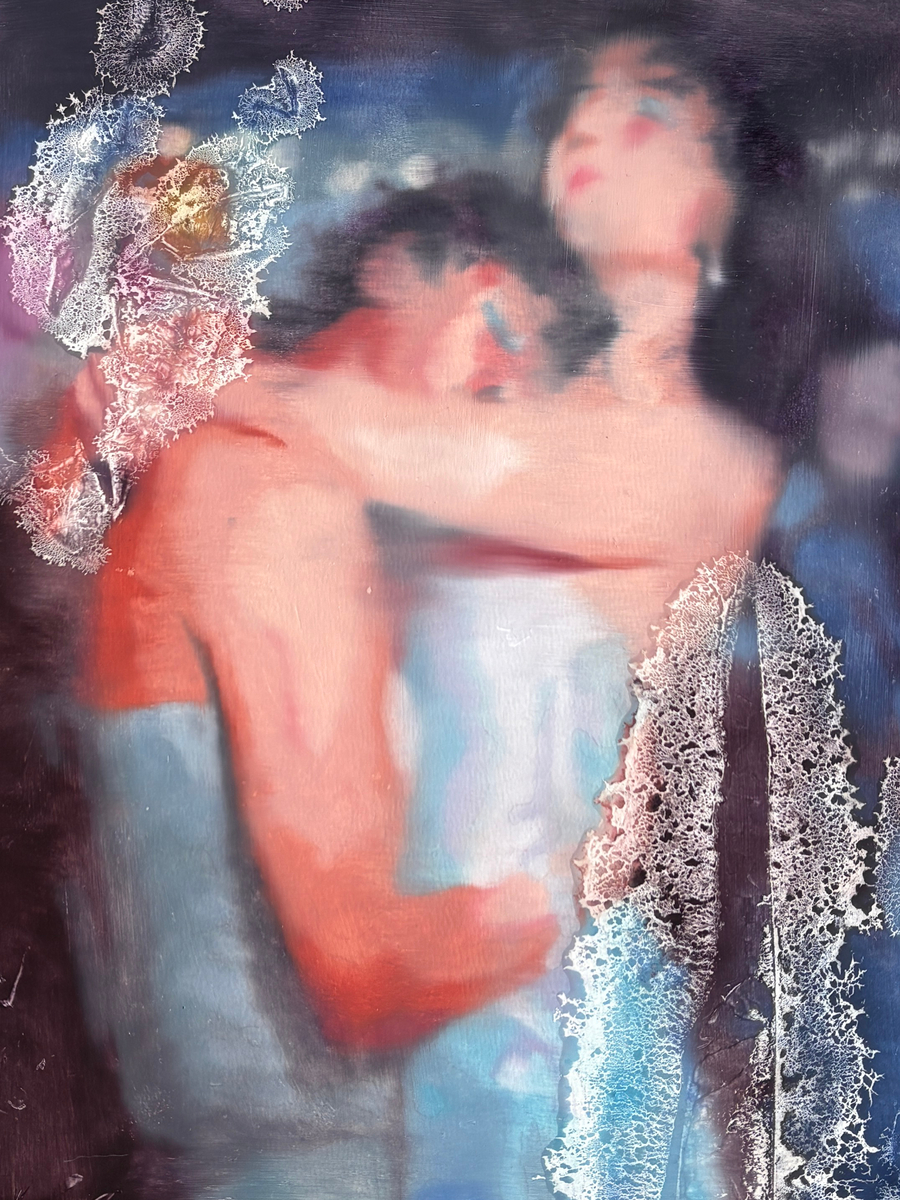
Queer Prom, 2025
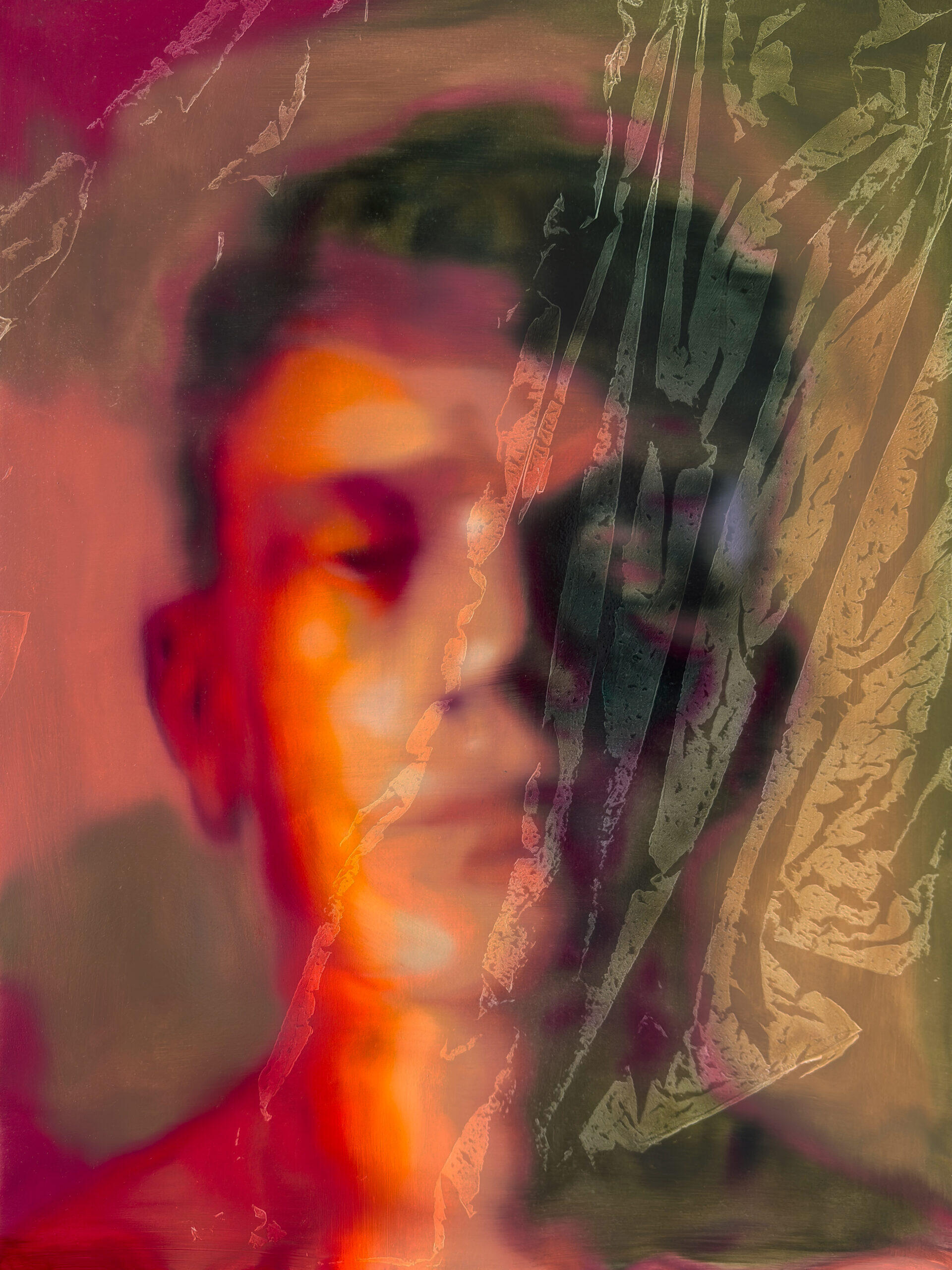
Blurred, 2026
Why Queer Visibility in Art Still Matters
Broadening our understanding of queer art should not mean making queerness invisible again.
There is a difficult balance here.
For a long time, queer artists and queer lives were excluded from dominant narratives of art history. Sometimes sexuality or gender identity was deliberately concealed; sometimes relationships were euphemised; sometimes the structures through which art history was written simply did not consider these biographies relevant.
Recent queer art exhibitions in Germany demonstrate how actively institutions are beginning to revisit those omissions.
In 2025, Kunstsammlung Nordrhein-Westfalen presented Queer Modernism. 1900 to 1950, described by the museum as the first comprehensive European exhibition devoted to the contribution of queer artists to modernism. More than 130 works by 34 international artists were brought together to tell an alternative history of modernism—one in which desire, gender, sexuality and self-representation become central rather than peripheral.
For a long time, queer artists and queer lives were excluded from dominant narratives of art history.
In Berlin, the 2026 project Queer Art in the GDR? Biographies between Underground and Propaganda approached the question from another direction. Across several institutions, it examined artists and their biographies in East Germany and asked to what extent sexual orientation influenced artistic practice and professional life.
The question mark in the exhibition title is significant. It leaves room for ambiguity.
Rather than assuming that an artist’s biography automatically determines the meaning of every work they make, it asks us to consider the relationship between identity, lived experience, political conditions and artistic production.
That seems to me a productive way of thinking about queer art.
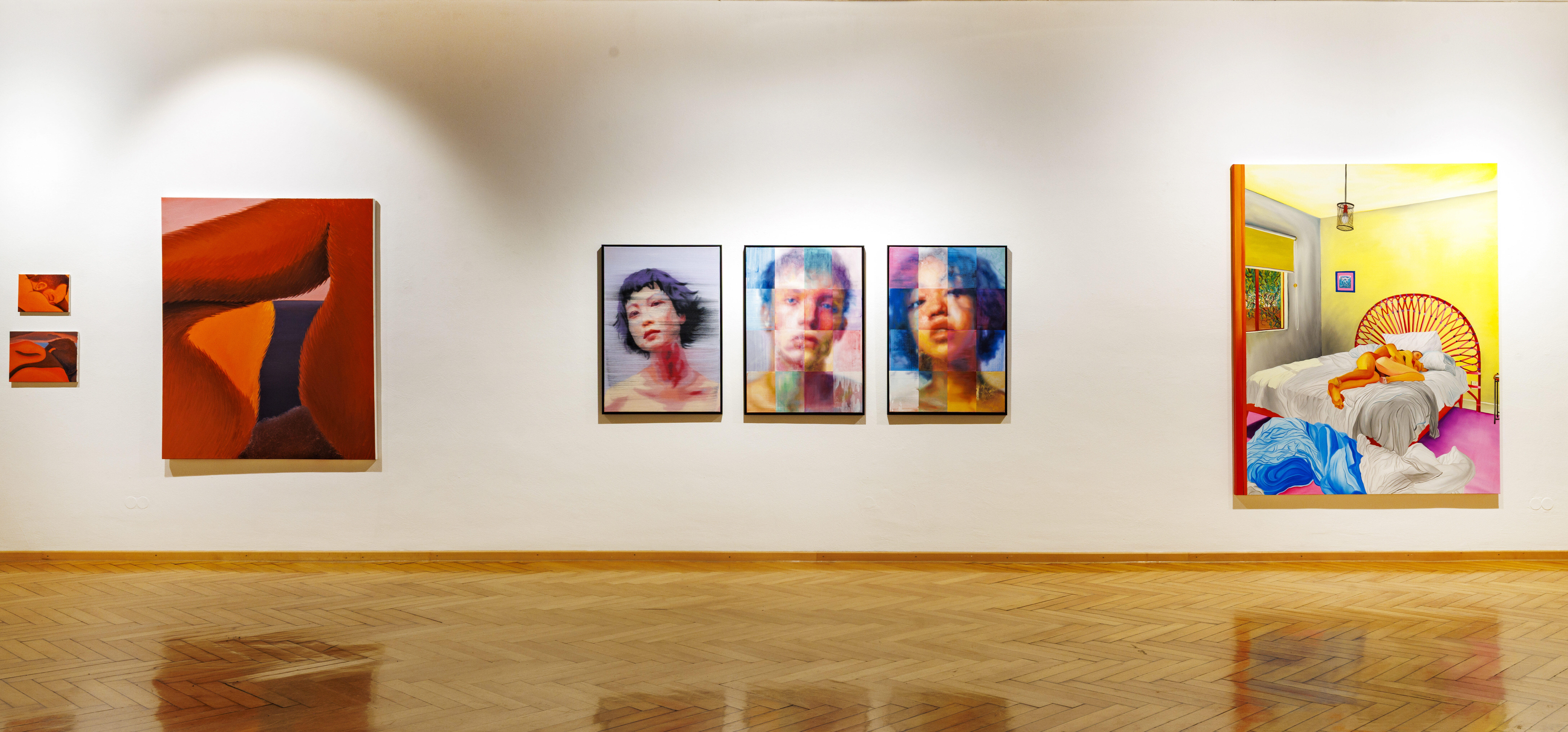
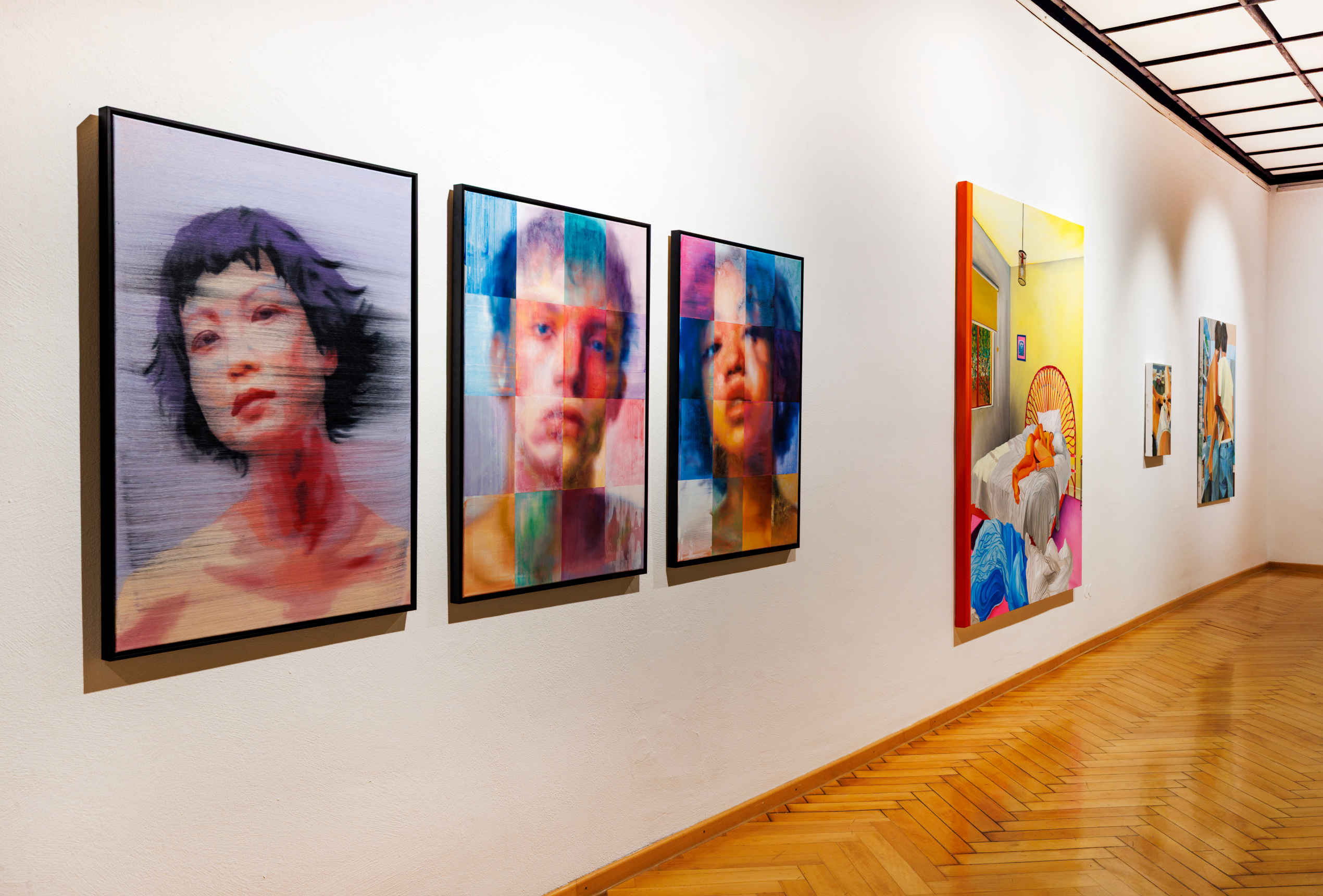
When the Private Becomes Political: Intimität at Kunstmuseum Albstadt
I experienced another version of this discussion personally through Intimität – Queere Kunst der Gegenwart at Kunstmuseum Albstadt in 2025 and 2026.
The exhibition brought together works by Dylan Hurwitz, Doron Langberg, Navot Miller, Hannah Römer, Tanja Selzer, Logan T. Sibrel and myself. Its understanding of intimacy deliberately extended beyond sexuality. Relationships, trust, vulnerability, belonging and the experience of being seen and accepted all became part of the conversation.
That distinction was important.
Queer visibility does not only mean making sexuality visible. It also means allowing queer people the full emotional complexity routinely afforded to everyone else.
We can be sexual, but we can also be lonely.
We can desire, but we can also remember.
We can be confident and visible while simultaneously carrying the instinct to protect ourselves.
We can experience intimacy through sex, but also through friendship, tenderness, shared history, grief and the quiet recognition of another person.
To represent queer lives fully means allowing all of those things to exist.
Queer Art in Museums: Who Gets to Be Part of Art History?
Museums participate in deciding which stories become cultural memory.
When institutions revisit modernism through queer biographies, investigate artistic life in the GDR from queer perspectives, or place contemporary queer artists into dialogue with art history, they do more than increase representation. They question how the canon itself was constructed.
Who was remembered?
Whose relationships were documented?
Whose identity was considered relevant?
Who had the freedom to be visible in the first place?
And whose work might look different if we understood more about the life from which it emerged?
These questions complicate art history rather than simply adding a new category to it.
That is important because there is a danger in treating “queer art” as a separate room within contemporary culture—as though mainstream art exists over here, while queer art, women’s art or art by other historically marginalised groups exists somewhere else.
Queer artists have always been part of art history.
What changes is whether we recognise the perspectives they brought to it.
Beyond Queer Representation
This is why I think the next conversation around queer art needs to move simultaneously in two directions.
We still need visibility.
At a time when queer identities continue to be politically contested, there is value in seeing queer bodies, relationships and lives represented openly. There is value in exhibitions explicitly identifying themselves as queer. There is value in young people entering a museum and encountering experiences that might resemble their own.
But visibility alone is not the endpoint.
Queer artists should also have the freedom to make work about memory, landscape, abstraction, family, loneliness, architecture, dreams, ageing, spirituality or anything else without their queerness becoming either irrelevant or the only framework through which the work can be understood.
Perhaps that is one of the most interesting possibilities of queer contemporary art today.
It does not have to choose between specificity and universality.
A work can emerge from a distinctly queer experience and still speak to someone whose life is entirely different. Vulnerability is not exclusively queer. Neither are longing, nostalgia, fear or the desire to belong.
But the way we arrive at those emotions is shaped by the lives we have lived.
For me, that is where queer art becomes particularly powerful: not when it can be reduced to a recognisable set of symbols, bodies or subjects, but when queer experience becomes one of the perspectives through which we understand something larger about being human.
Visibility remains essential.
But perhaps true visibility also means being allowed to be complex.